
🥗🧠 Diet & Mental Health:
Is Your ‘Junk Food’ Silently Making You Depressed?
Have you ever noticed how a heavy, oily pizza or burger makes you feel sluggish afterwards? Or after several days of packaged, processed foods, you become irritable without any real reason? We often think depression or anxiety only comes from our thoughts or external stress. But modern science and our ancient traditions reveal a completely different truth.
The truth is that your gut and your brain are directly connected. What you eat doesn’t just affect your body weight — it directly controls your mood, your thinking, and your mental peace.
Let’s dive deep into how our modern ‘junk food’ culture and sedentary lifestyle are pushing us toward mental illnesses — and what solutions Ayurveda and even UNESCO offer.
During a special broadcast on Sansad TV, Prof. Dr. Santosh Kumar Bhatte from the All India Institute of Ayurveda revealed a bitter reality. According to him, nearly 75% of the food being consumed today is outside junk food, fast food, or frozen products. In the pursuit of taste, we are consuming high-calorie, hard-to-digest meals daily, which slowly accumulate toxins in our bodies. These toxins don’t just cause obesity — they directly impact our mind and emotional health.
Ayurveda’s 4-Pillar Formula: Aahar, Vihaar, Aachaar & Vichaar 🌿
In Ayurveda, a person falls prey to depression or anxiety only when their mental resilience (Manobal) diminishes. To restore balance, Ayurveda describes four foundational pillars of complete health:
Aahar (Diet)
Pure, Sattvic, Fresh
Vihaar (Lifestyle)
Daily movement, exercise
Aachaar (Conduct)
Social behavior, ethics
Vichaar (Thoughts)
Positive mindset
(Aahar Shuddhau Sattva Shuddhih) — “Purity of food leads to purity of mind.” — Chandogya Upanishad
This ancient wisdom means: when your diet is pure, fresh, and sattvic, your mind becomes energetic, joyful, and healthy. Ayurveda teaches that the mind is nourished not just by positive thoughts but also by the subtle essence of the food we eat.
Vihaar: The Downside of a Sedentary Life
‘Vihaar’ refers to our physical activities. The more physically active we remain, the further depression stays from us. However, today’s sedentary lifestyle has made us internally passive. This lack of physical activity has become one of the biggest causes of depression in modern times.
UNESCO & the Role of Physical Education 🏃♂️⚽
The link between sports, physical activity, and mental health is not just an Ayurvedic principle — it’s backed by global institutions like UNESCO. According to UNESCO’s Kazan Action Plan (KAP), physical education and sports are among the most essential tools for human health and well-being. Scientific evidence consistently shows that individuals who adopt an active lifestyle have a significantly lower risk of depression. This is why UNESCO’s Quality Physical Education (QPE) project is shaping policies worldwide to integrate movement and sports into daily life, especially for mental resilience.
Aachaar & Vichaar: The Impact of Conduct and Thinking 🧠💭
Aachaar (Conduct): How we behave in our society and family determines a large part of our mental health. If we treat each other with empathy, avoid unnecessary conflicts, and maintain harmonious relationships, we naturally reduce stress and keep depression at bay.
Vichaar (Thoughts): This is the most critical pillar. Most psychiatrists agree that people with a pessimistic personality are far more vulnerable to depression. By consciously shifting our outlook toward gratitude and constructive thinking — believing that “whatever is happening is for my highest good” — we can prevent the mind from falling into the trap of chronic sadness.
Simple Changes You Can Make Today 💡
- Transform your plate: Cut down on packaged chips, frozen nuggets, and frequent pizza/burgers. Eat fresh home-cooked meals, fruits, and green vegetables. As the food, so the mind.
- Sweat for 30 minutes daily: Dance, hit the gym, practice yoga, or walk briskly. This ‘Vihaar’ releases endorphins and naturally fights depression.
- Reframe your thinking: Before sleeping, write down 3 things you’re grateful for. Replace pessimism with a positive inner voice.
Your body and mind are not dustbins where you keep dumping junk and still expect happiness and peace. Healthy food, a little exercise, and a positive mindset make depression a much smaller adversary — we can easily prevent it.

Find a Mental Health Helpline Near You
☎️ Find a Mental Health Helpline Near You If you or someone you care about is struggling emotionally, you can […]

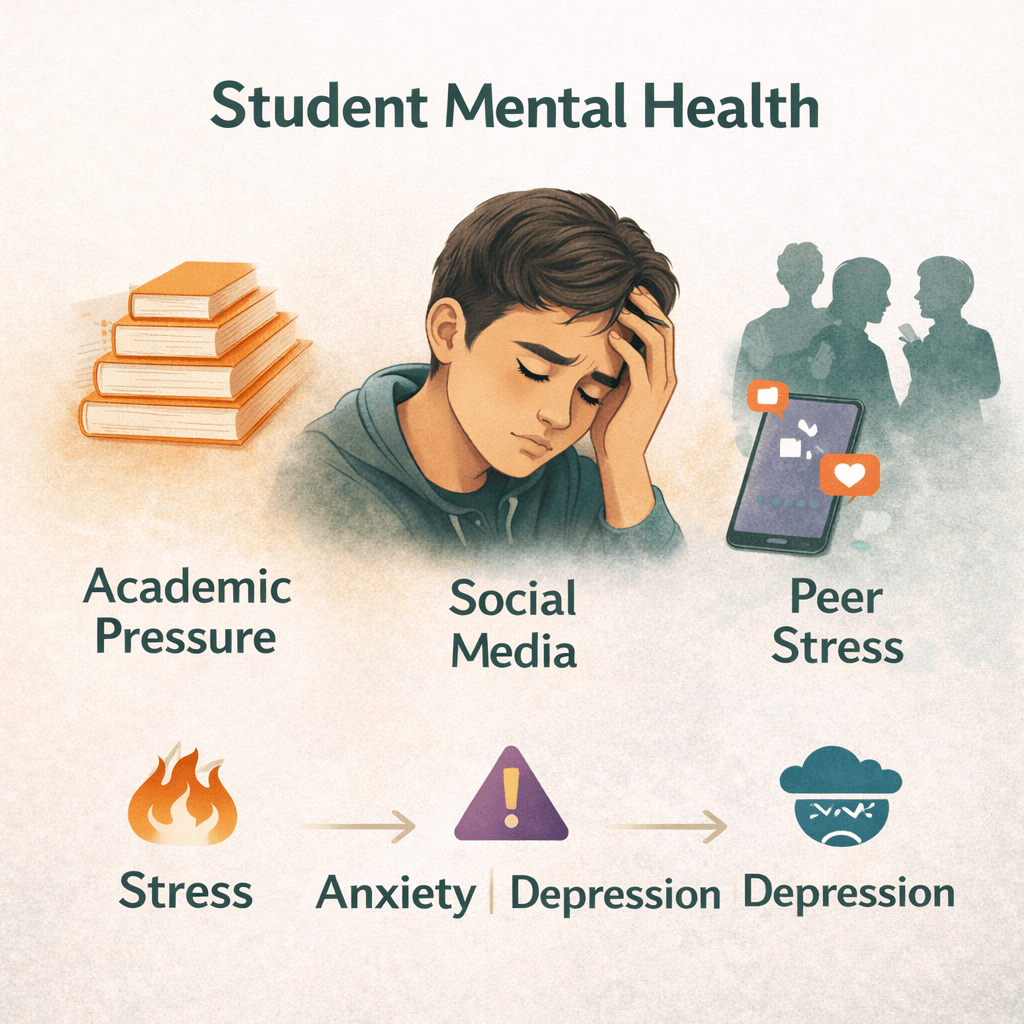
Mental Health of Adolescents & Students
Mental Health of Adolescents and Students | MindCareJourney Mental Health of Adolescents & Students Academic Pressure | Social Media | […]

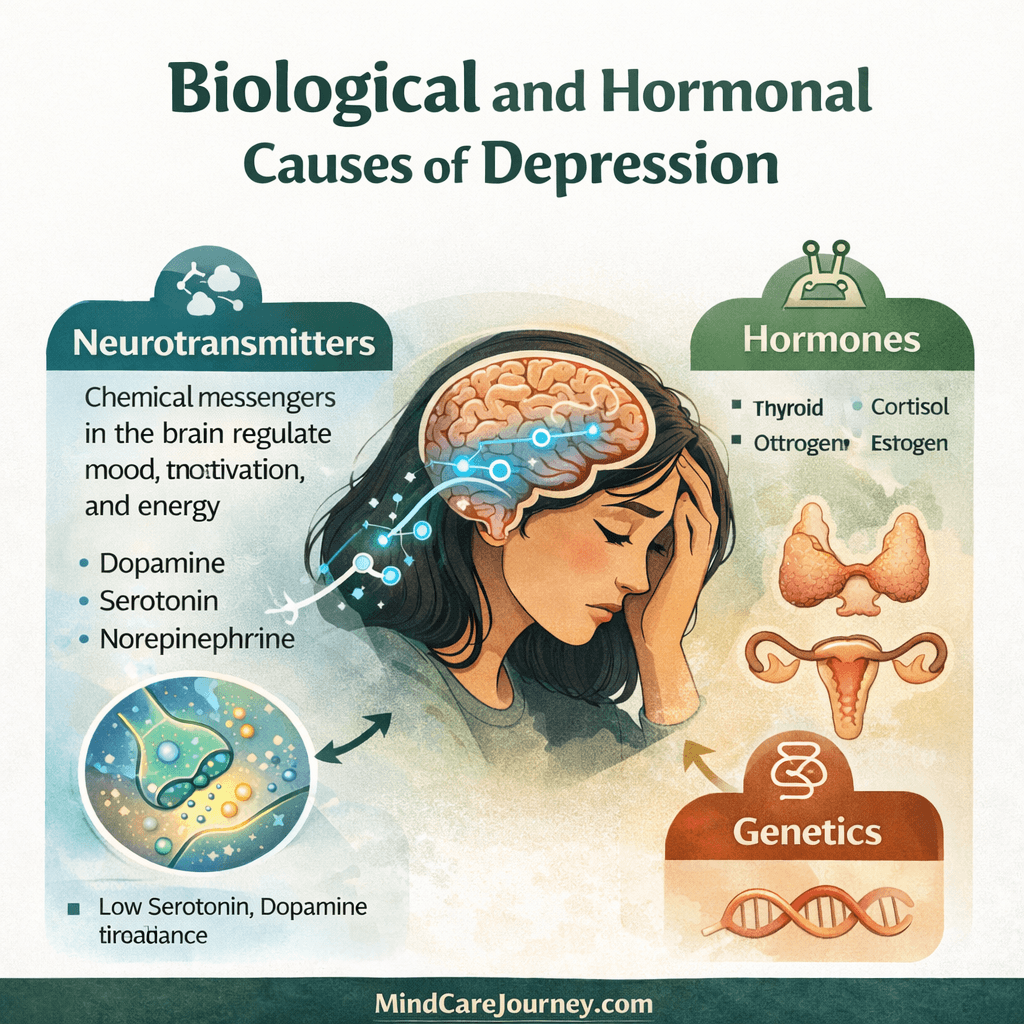
Biological & Hormonal Causes of Depression
Biological and Hormonal Causes of Depression | MindCareJourney Biological & Hormonal Causes of Depression Neurotransmitters | Hormones | Genetics | […]

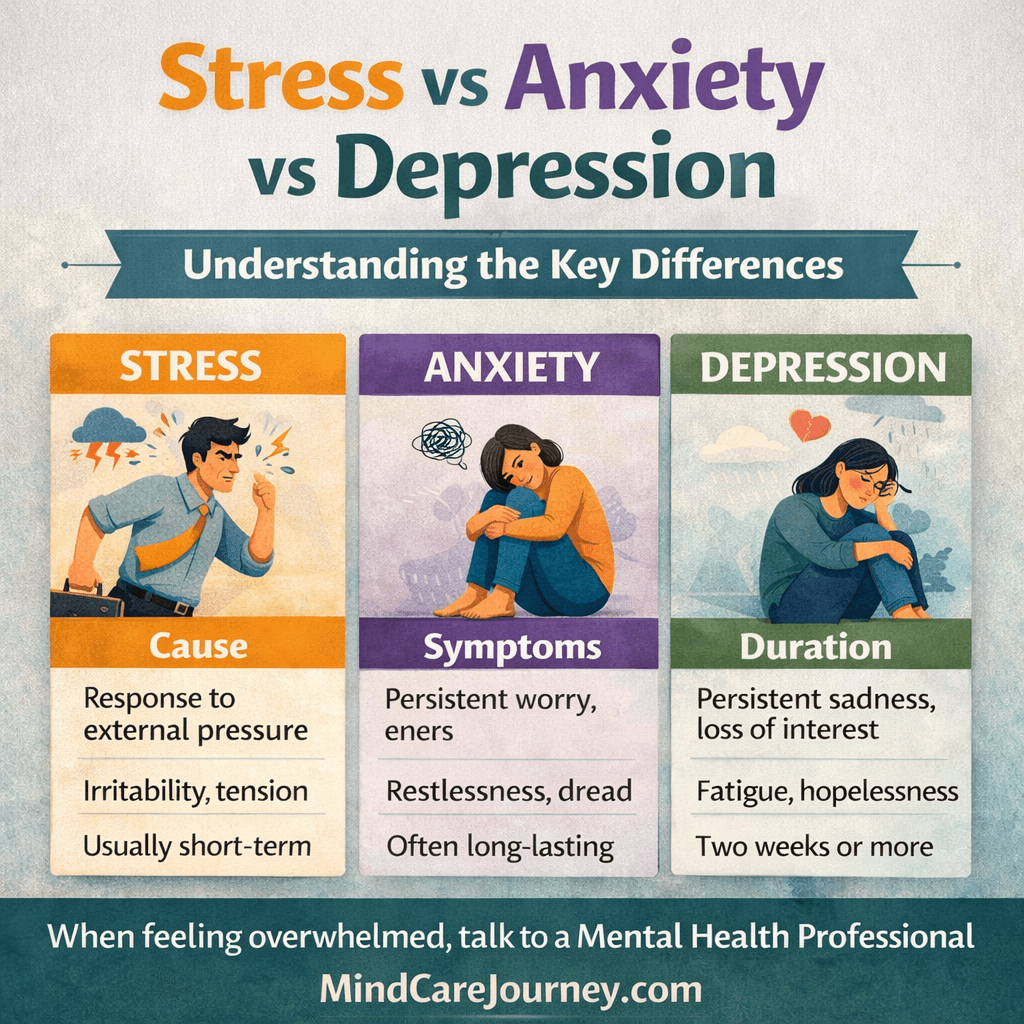
Stress vs Anxiety vs Depression: Key Differences
Stress vs. Anxiety vs. Depression: Key Differences | MindCareJourney Stress vs. Anxiety vs. Depression: Key Differences Know the Signs | […]


Tell us your thoughts! 💬
Have you ever noticed that junk food affects your mood or energy? What did you have for lunch today? Share your real-life experiences below 👇
Absolutely spot on! When I stopped junk food for 2 weeks, my anxiety levels dropped by half. Truly, you are what you eat.
I used to eat burgers almost daily. Felt sluggish and low all the time. After switching to home-cooked meals + daily walks, I feel so much lighter and happier. Thank you MindCareJourney!
Ayurveda’s four pillars are incredible. Diet and thoughts both matter. The UNESCO insight was new to me — definitely sharing this with friends.
Your comments help us spread awareness and build a healthier community.